Data destruction
Introduction
Although it is possible to prevent the collection of data, it is also important to think about the data that you might need for your research at first, but that become redundant later on. By planning for timely de-identification and destruction of your data, you can better protect your participants. You can use the examples below to help you prepare for the timely destruction of data.
Secure and destroy personal identifiable notes
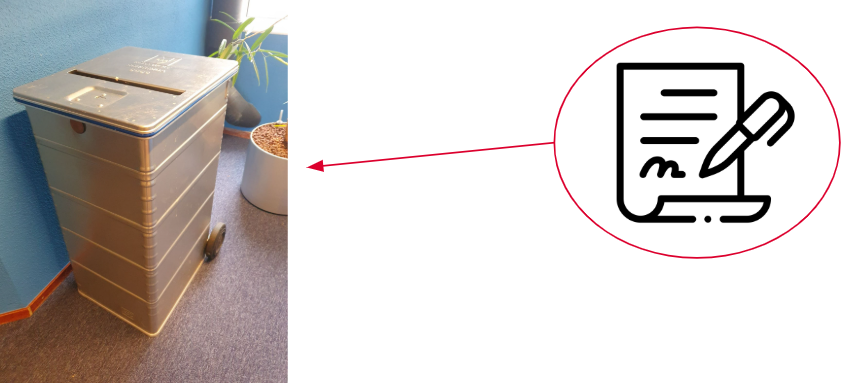
During your research, you may unexpectedly need to record personal information about a participant. For example, a participant may report a change in their contact details or provide additional personal comments. Whenever possible, record this information directly in a digital format on the secure storage solution you use for your research documentation. If this is not possible, temporarily record the information on paper and digitize it as soon as possible. Do not retain personal information longer than necessary, especially on paper. Once the information has been digitized, immediately destroy the original paper notes using UG confidential paper containers or a shredder. Please do not shred paper by hand into a few pieces, and do not throw paper containing confidential data in an open paper bin.
Figure 1: Confidential paper container
Securely remove your data from devices and platforms
While collecting data, it is often necessary to use storage solutions that are no longer necessary after you have collected the data and are going to analyse the data. Transfer your data from these devices and platforms to a secure storage location as soon as possible. First, make sure that you check the integrity of the data. As soon as this is confirmed, remove the data from the device or platform.
Final clean-up (after archiving)
Before you do your final clean-up, it is important to check whether all necessary data are included in your data package, publication package or archive according to your faculty research data policy.
After you have confirmed that your data is archived correctly, you can critically review the data you have stored during your research:
- Check whether you have removed all copies of your data from secondary locations (e.g. the data collection platform, laptop, SurfDrive, Unishare, etc.)
- Delete the data from your working directory after archiving if you are no longer planning to use the data for future projects. Make sure to follow the agreements made with participants.
- If you are still working with the data, clean your working directory by: 1) Deleting any temporary working files (e.g. data that can easily be regenerated by archived scripts). 2) Removing duplicate or obsolete versions (e.g. final_v1.csv, final_v2.csv, etc.).