Table of Contents
Search
The RDMS Web interface provides extensive and flexible search functionality. Unlike other UG storage solutions, the RDMS search engine allows you to use metadata for precise data queries. You can also create more advanced searches by combining multiple metadata entries. The following sections explain the basic search functions and provide examples of simple and advanced metadata queries.
Accessing RDMS Search
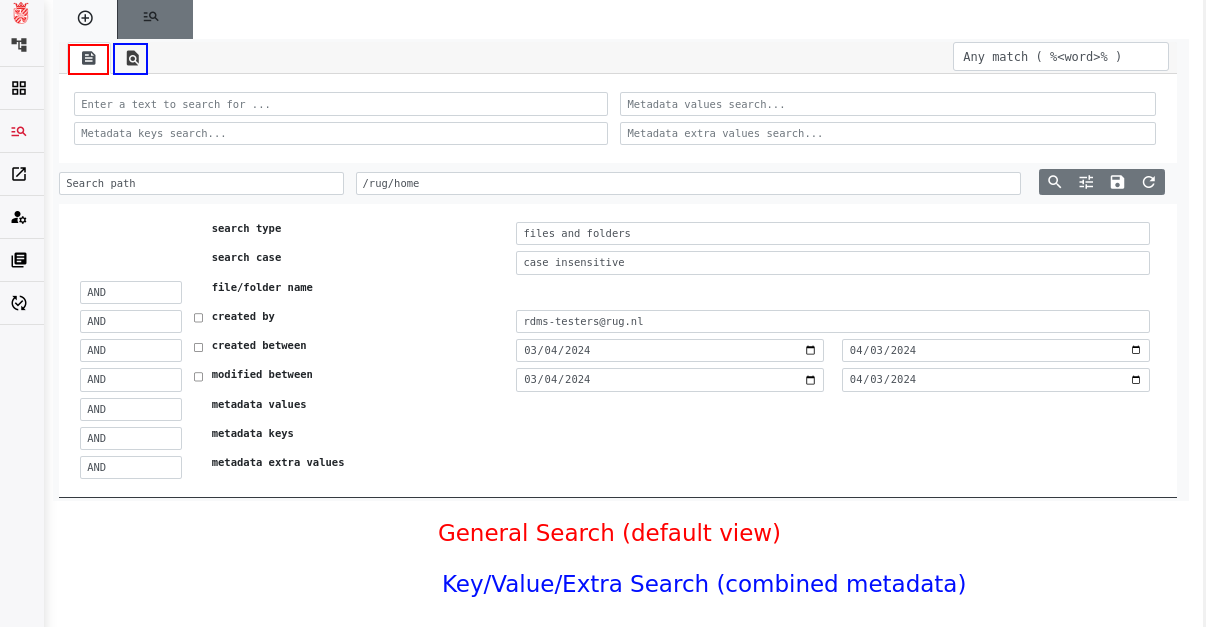
You can access the search engine from the menu bar on the left side of the Web interface. After logging in, click the  button to open the search interface in the current tab.
Search Functions
General Search and Key-Value-Extra Search
The RDMS provides two search options:
- General Search: You can use this option to find files and folders based on different criteria. The search uses both system-defined metadata and user-defined metadata.
- Key-Value-Extra Search: You can use this option to query multiple metadata entries simultaneously. Open this search option by clicking the
 button at the top of the search interface.
You can switch between the two options by selecting the corresponding tab at the top of the search interface. Later sections provide examples of both simple and advanced queries.
Tabbed Searches
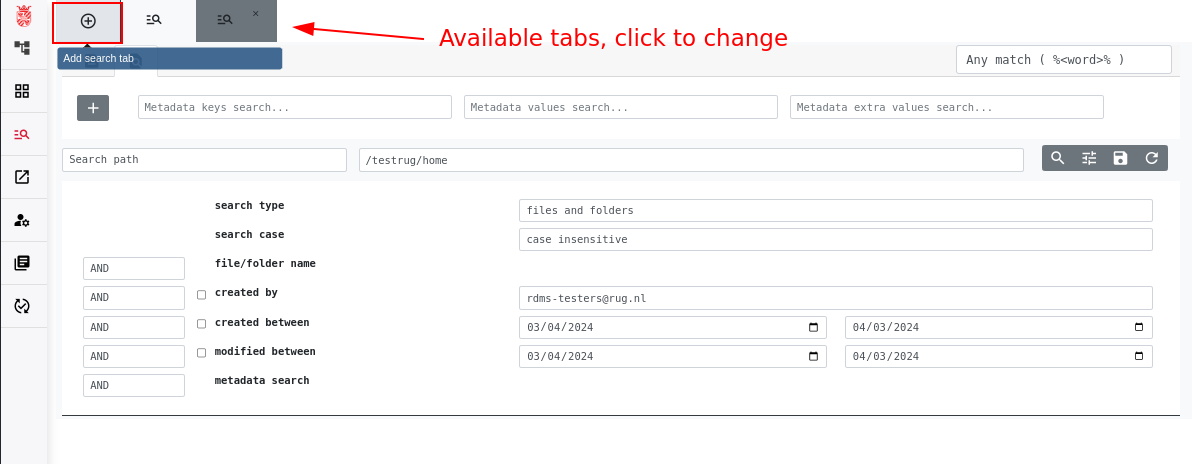
You can perform and manage multiple search queries simultaneously. Click the  button in the top menu to add a new search tab.
Saved Searches
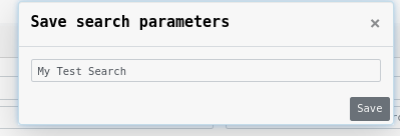
You can save searches for future use. After entering the required search terms, click the  button in the search view.
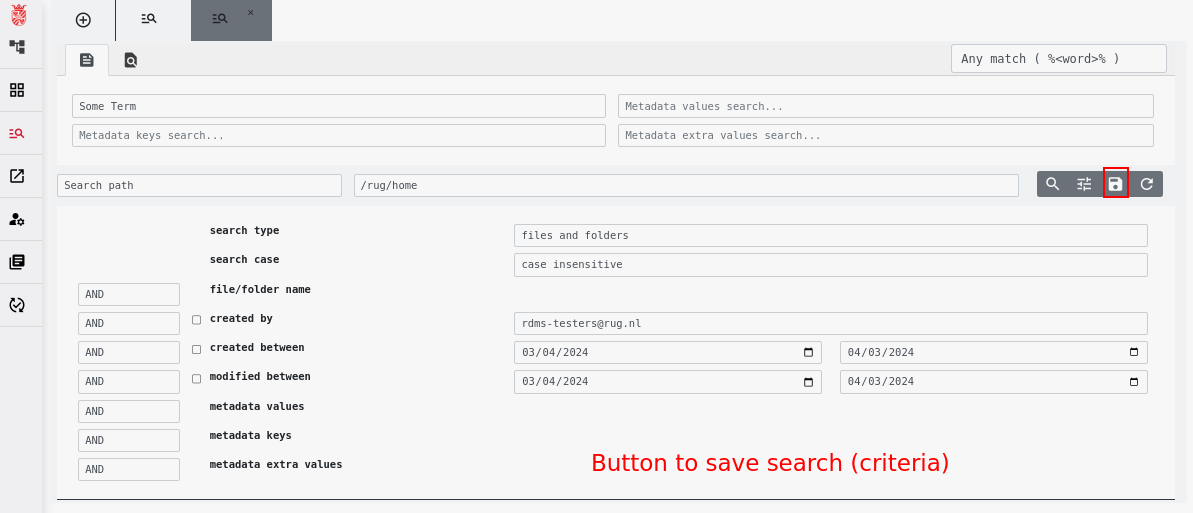
The system asks you to name the saved search. Choose a clear and descriptive name so that you can identify the search later.
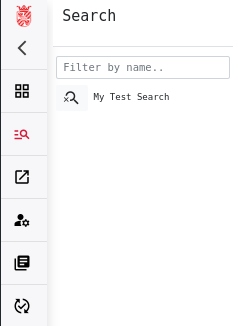
To reload a saved search, open the search menu in the search window. The menu lists all saved searches, as shown below. Click the name of a saved search to load its parameters. Then click the  button to run the search. To remove a saved search, click the
  button.
Sub-Searches
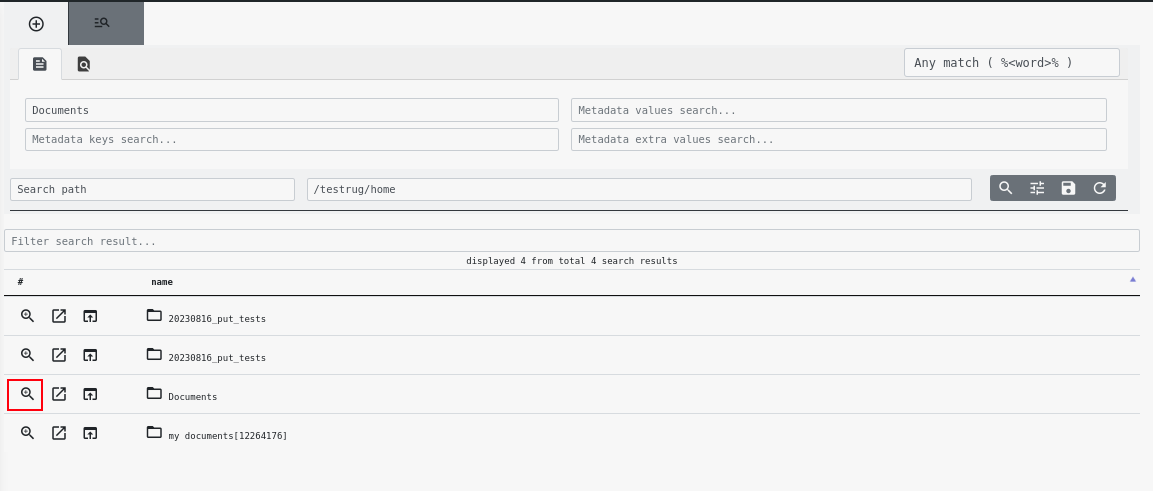
When a search returns at least one result, you can perform a subsequent search within the location associated with that result. Click the icon highlighted in red in the screenshot below. The RDMS opens a new search tab containing the parameters of the previous query. Click the button to run the search in the new location.
Notes:
- If you perform a sub-search on a folder, the RDMS repeats the search inside the selected folder.
- If you select a file, the RDMS performs the sub-search inside the folder that contains the file.
- You can use either General Search or Key-Value-Extra Search in the sub-search tab.
- You can perform sub-searches within previous sub-searches by repeating the same procedure in the new location.
Opening Search Results
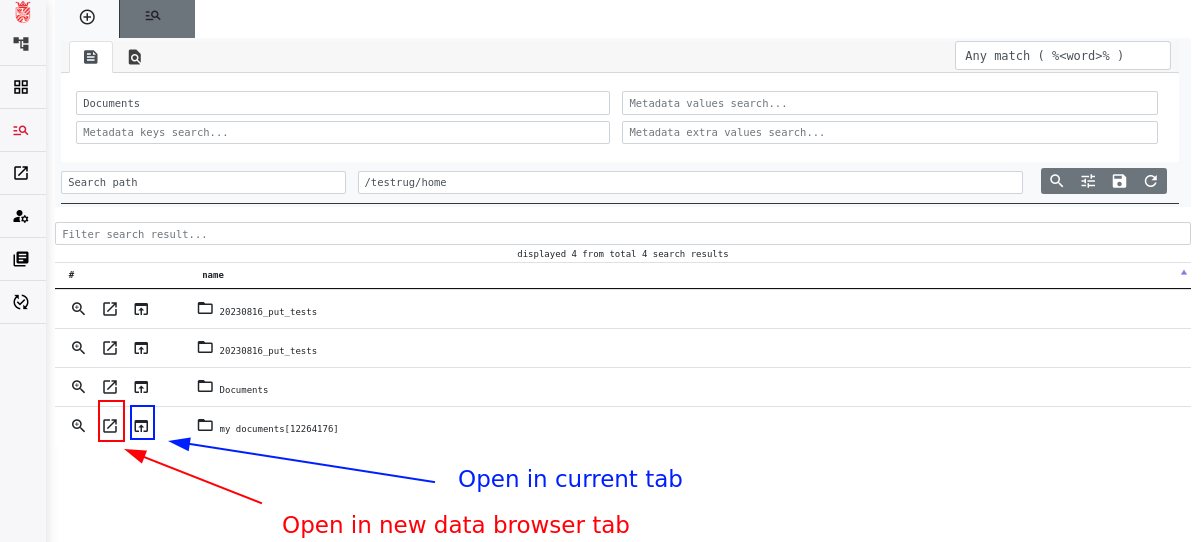
After running a query, you can open the location of a search result in either of the following ways:
 button: Opens the result in a new Data Browser tab and keeps the original search open in the current tab.
 button: Opens the result in the current tab. The search window is replaced by the Data Browser at the location of the selected result. To return to the search, reopen it from the menu bar and run the query again.
Using RDMS Search
General Search
To perform a basic search, enter a search term in the top field and click the button.
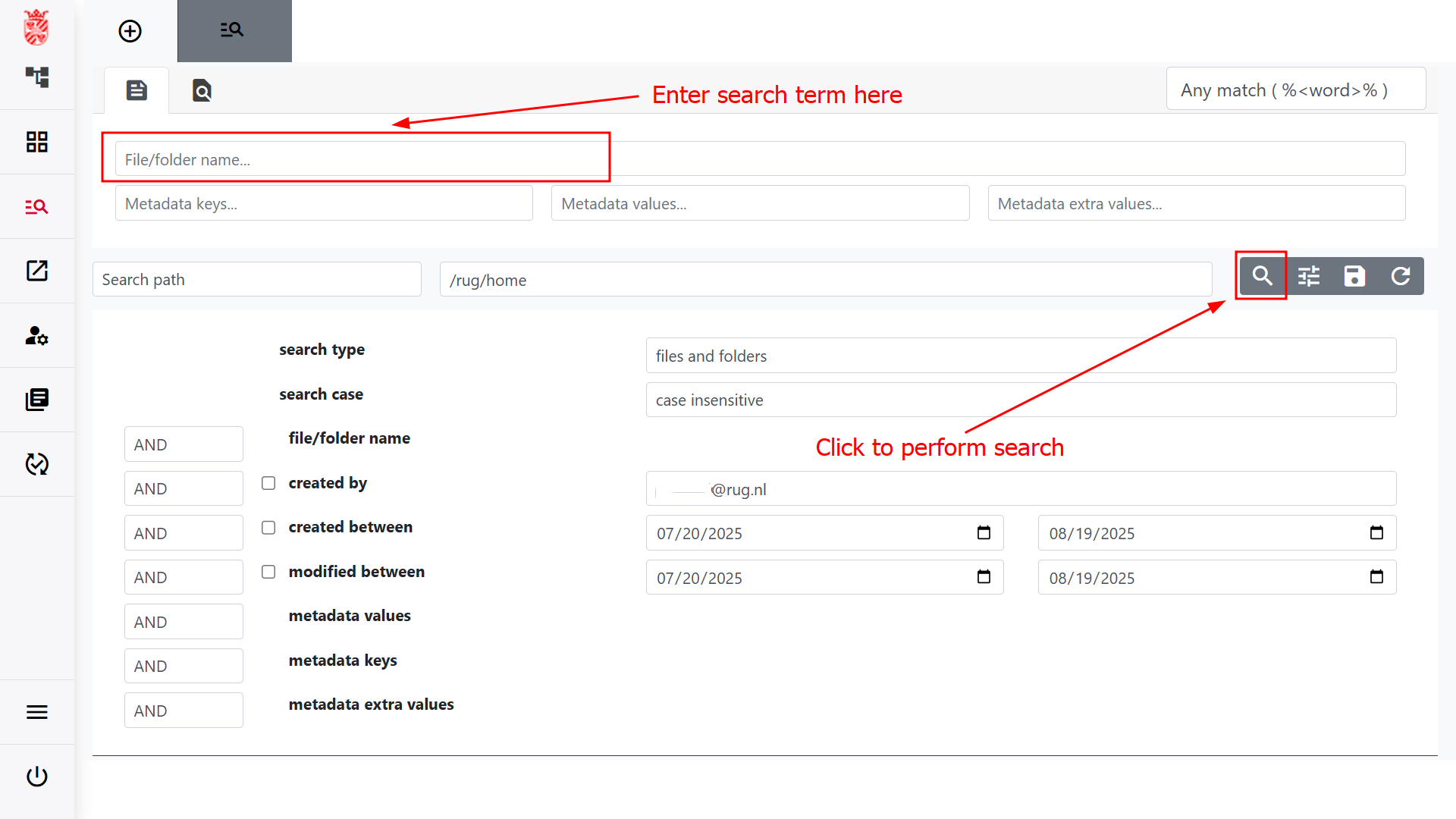
This search looks for the specified term in file and folder names. To target a specific metadata entry, search for a metadata key, value, or extra value. You can also change the search path and choose whether to search for files, folders, or both. The screenshot below shows additional options.
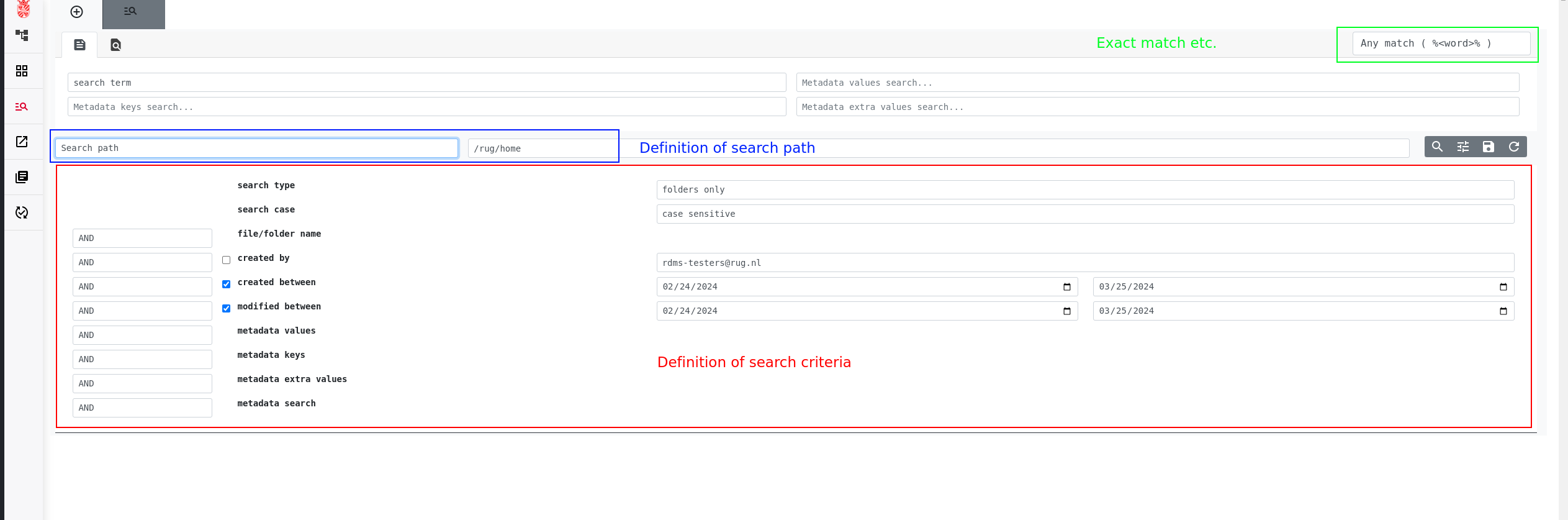
The main search view contains three areas for defining search criteria:
- Blue Box: Specify the path to search. The default value is
/rug/home/. You can change it manually or by performing a sub-search. You can also select predefined values, such as "My home" or "All". - Red Box: Configure additional search options. For example, you can choose whether to search for files or folders, restrict results to a specific creation period, or enable case-sensitive matching. If this menu is hidden, click the
 button. By default, an object must meet all specified criteria to appear in the results. The logical operator is "AND", as shown on the left side of the box. To find objects that meet any of the specified criteria, change the relevant operator to "OR".
 - Green Box: Refine how the search terms are interpreted. "Any match (%<word>%)" finds the term either as a standalone value or as part of another value. For example, a search for
timealso findstimecapsuleandwalltime. "Exact match" returns only results that contain the exact search term. "Right truncated (<word>%)" matches values that start with the search term. "Left truncated (%<word>)" matches values that end with the search term.

Note: The % sign is the RDMS wildcard for any number of characters. Its position affects the results. For example, %cube finds both cube and values ending in cube, regardless of the preceding characters.
Key/Value/Extra Search
Although General Search can use metadata, Key-Value-Extra Search is designed specifically for queries that combine multiple metadata entries.
To perform a Key-Value-Extra Search, click the  button at the top of the search view. The search provides fields for metadata keys, values, and extra values. The "File/folder name…" field from General Search is not available in this view.
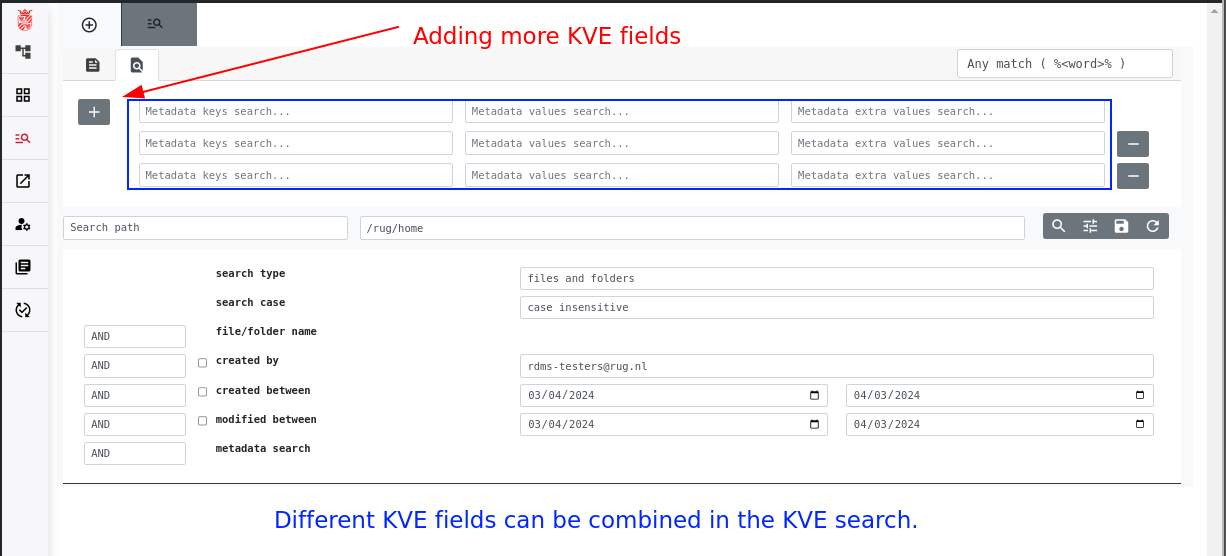
You can add multiple Key-Value-Extra rows by clicking the  button. To remove a row, click the
  button. The following example demonstrates how to use this functionality.
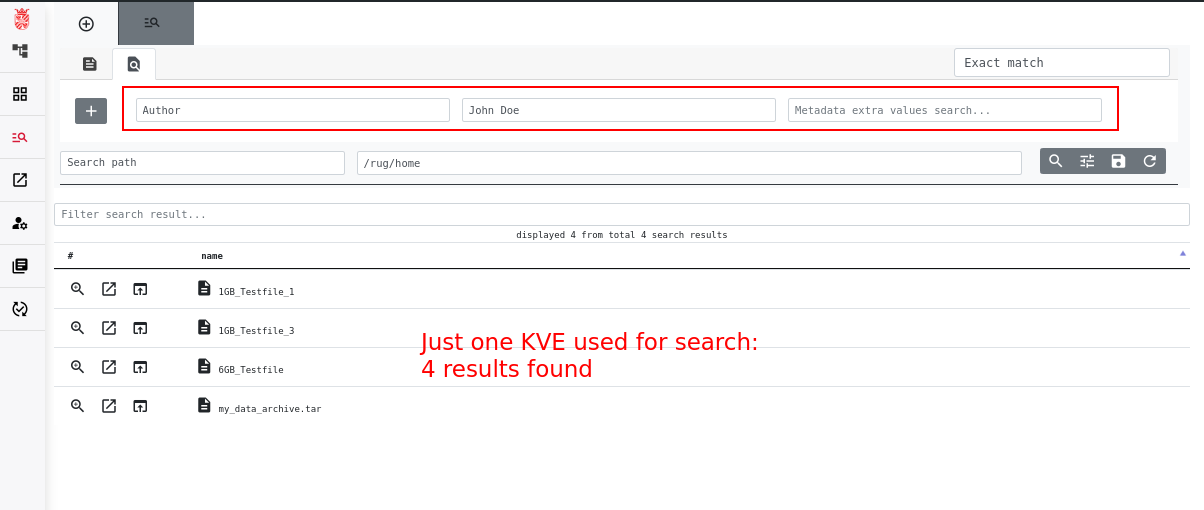
The first query uses one Key-Value-Extra row as the search criterion:
- Key: "Author"
- Value: "John Doe"
The search returns four files. Four results are easy to review, but a similar search could return thousands of files. To narrow the results, click the button and add another row:
- Key: "Date"
- Value: "today"
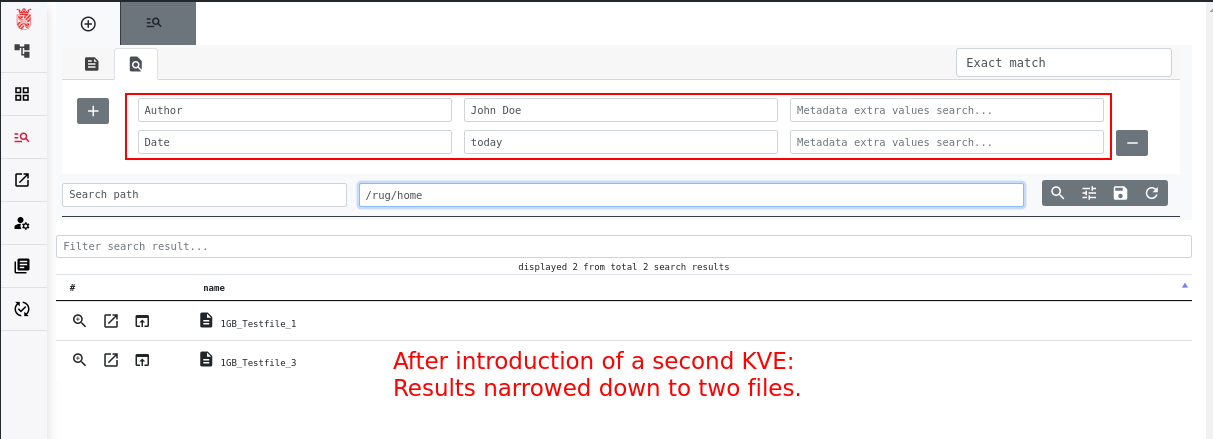
The second search returns only two of the original four results. Only two files contain both Author: John Doe and Date: today in their metadata.
If the search still returns too many results, add a third row:
- Key: "Distance"
- Value: "10"
- Extra value: "m"
This reduces the result list to one file.
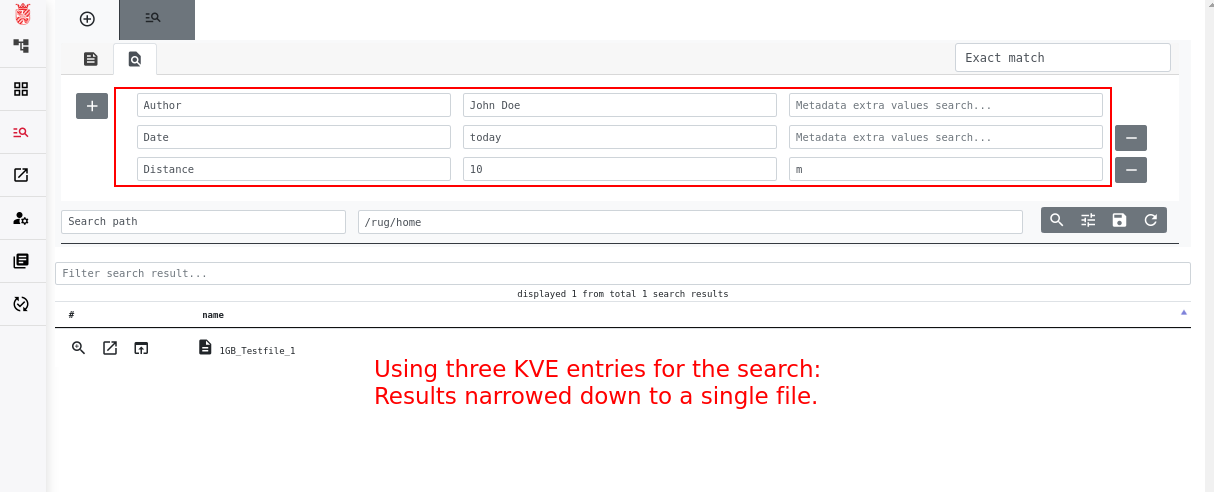
This example shows how to use all fields in a Key-Value-Extra row and how multiple rows can narrow the search results. Use only the fields required to identify the files or folders you need.
Notes:
- Combining multiple Key-Value-Extra entries is particularly effective for narrowing large result sets.
- This method is useful when many files or folders have similar but distinct metadata.
- If you are unsure which combination to use, enter only the values you know. For example, a search for
Key: "Author", Value: "John Doe"does not find a file whose metadata containsCreator: John Doe. To find that file, search only forValue: "John Doe".
Further Tips
Using Fast Search
In addition to the search functions described above, the RDMS provides Fast Search for simple queries from any location.
To access Fast Search, click the UG logo in the top-left corner of the Web interface.
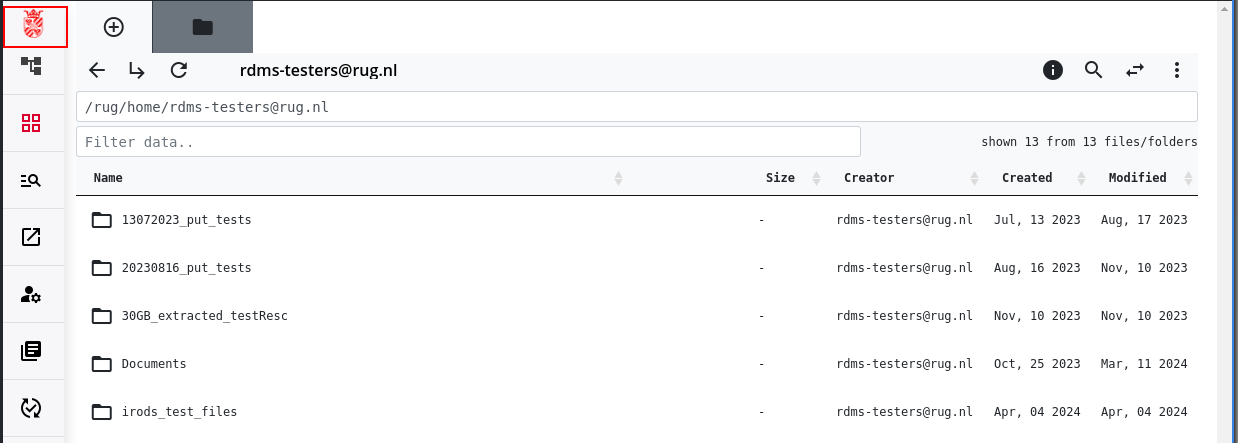
A menu opens with two search fields. The field on the left allows you to open a specific RDMS path directly in the Data Browser. The field on the right searches for a term using the default parameters and opens the results in the search window.

Note: Fast Search performs an Exact match query across all four fields in General Search. It is intended mainly for users with long file lists, for whom a standard search may take considerable time. Fast Search is therefore a streamlined search operation, not only a shortcut to the search interface. If standard searches complete quickly, use the full search interface to obtain more precise results.
Advanced Search Syntax
The RDMS supports special characters for advanced search operations. You can use the following wildcard characters in any search field:
_: Represents exactly one character. Searching forDevice_-DatafindsDeviceA-Data,DeviceB-Data, andDeviceC-Data, but notDeviceXXX-Data.%: Represents any number of characters. Searching forDevice%-Datafinds the same results asDevice_-Data, but it also findsDeviceXXX-Data.
The following example starts with a search for Device. The search returns six folders with similar names.
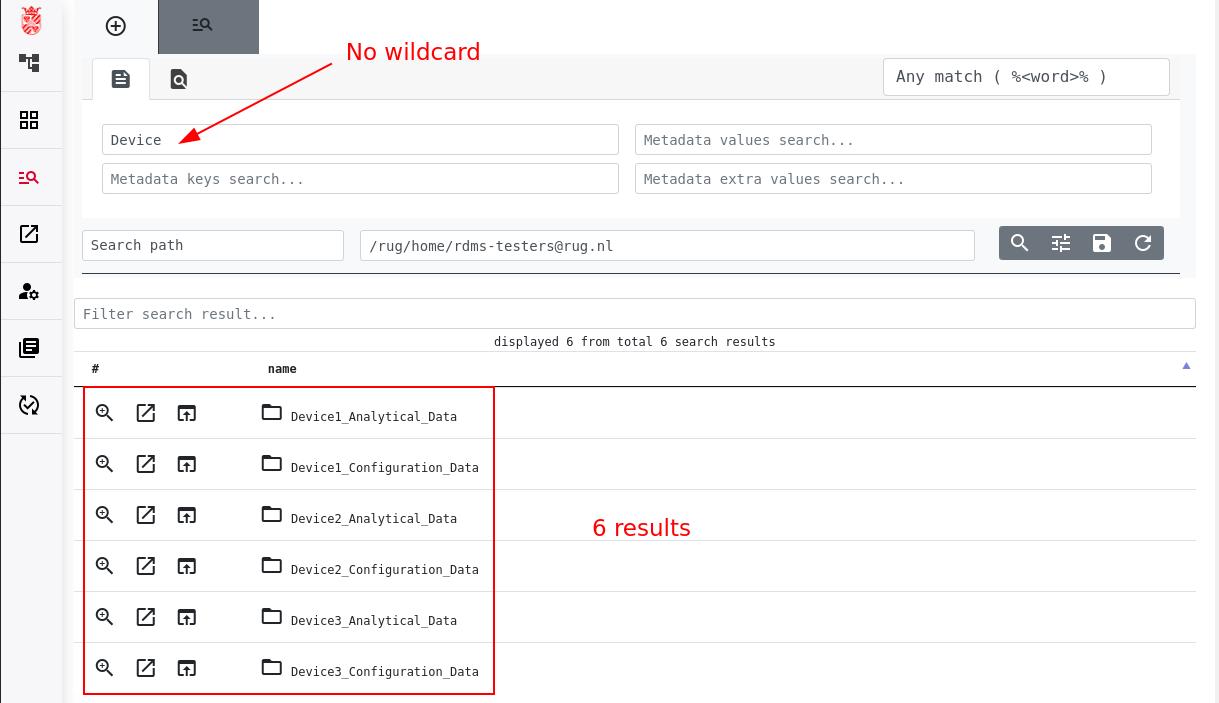
Suppose that you want to find the configuration data for all three devices, but not the analytical data. The configuration-data folder names differ only by the device number. Because only one character differs, search for Device_ Configuration Data to return all three folders.
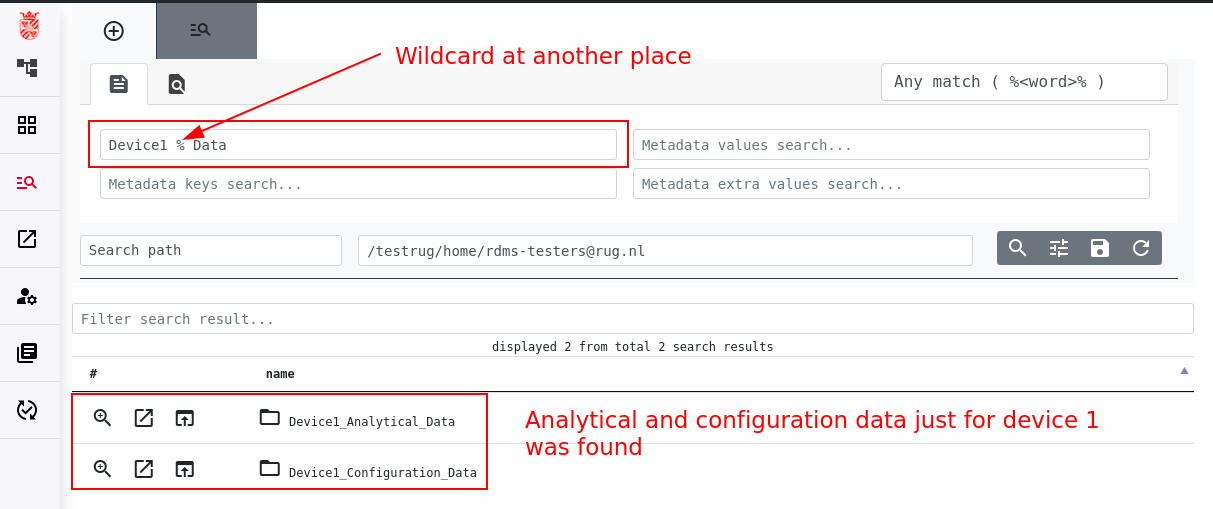
For names that differ by more than one character, use the more general query Device% Configuration Data.

Because this query uses the % wildcard, it also returns values such as Device312_Configuration_Data or DeviceBuilding4_Configuration_Data, if they exist. To find both the analytical and configuration data folders for Device1, while excluding other devices, use Device1_%_Data or the shorter query Device1%.
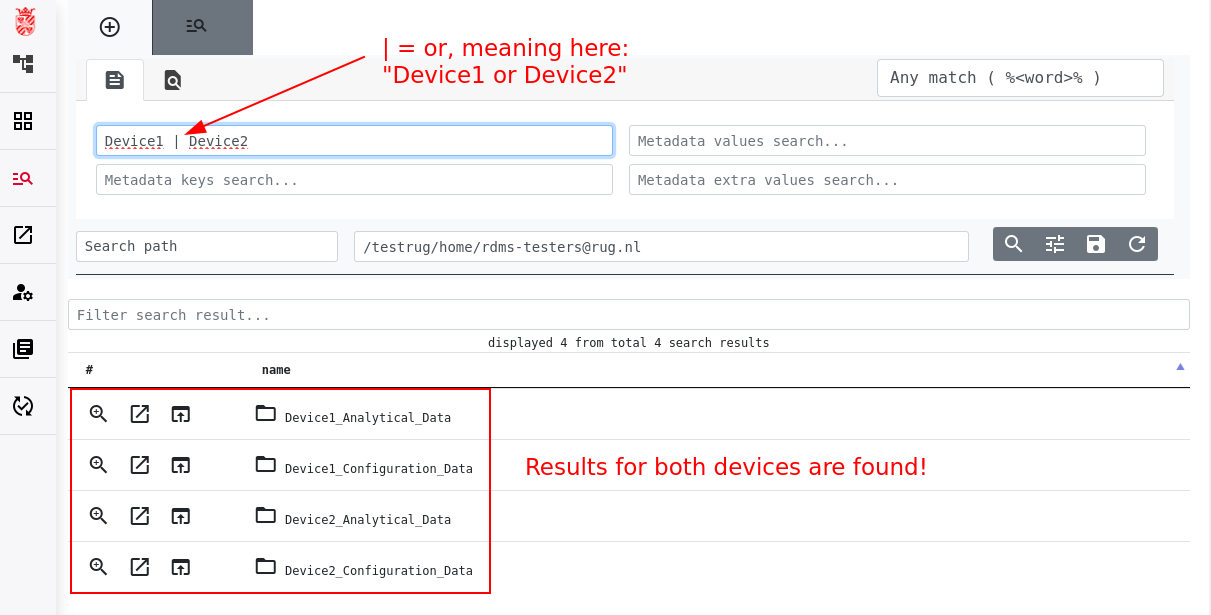
You can also use & and | as the "AND" and "OR" operators, respectively. To find results containing either Device1 or Device2 in their names, enter Device1 | Device2.
Note: Wildcards and operators allow you to refine search results further. Combined with the other search settings and metadata fields, these techniques support precise queries tailored to your requirements.
Filtering Search Results
Some searches may return too many results to review efficiently. The RDMS Web interface displays a warning when the number of results exceeds 10,000.
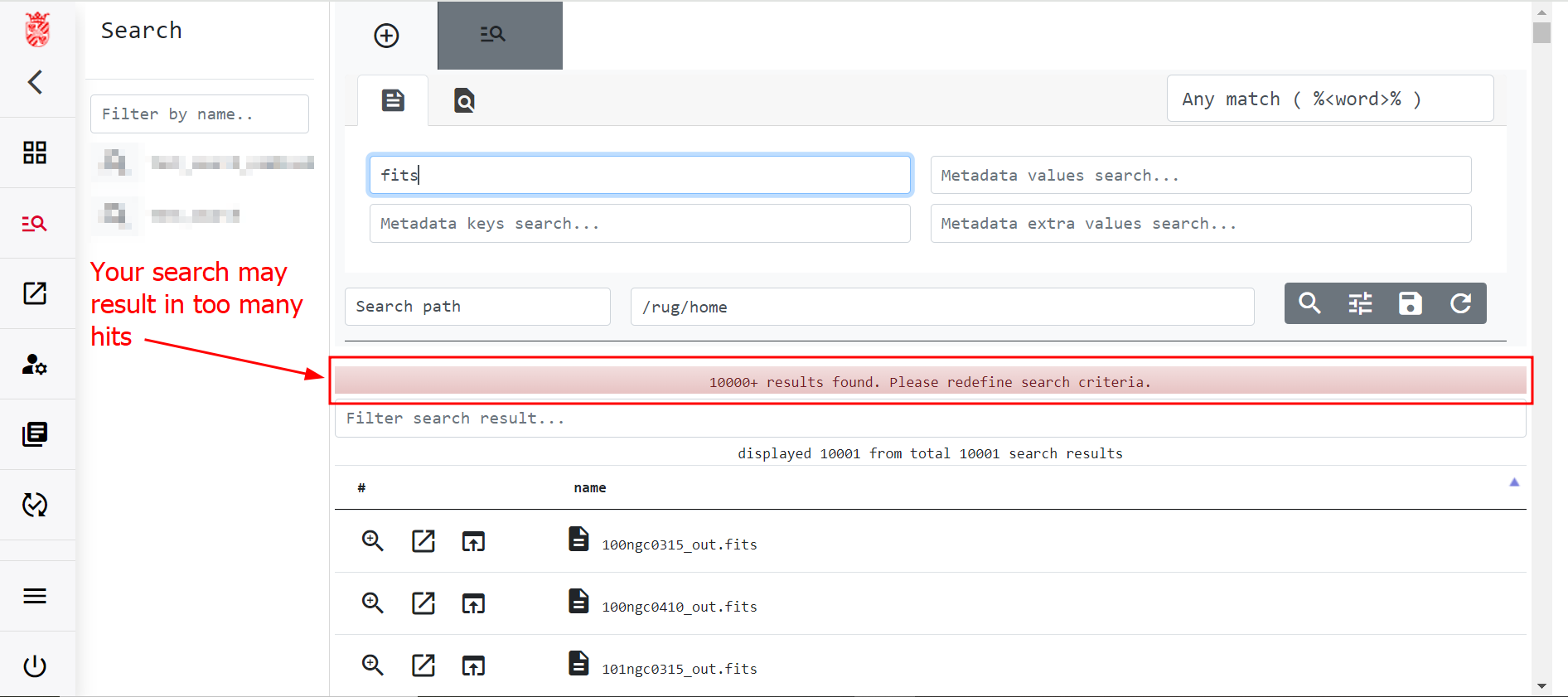
You can refine the original search parameters, as suggested by the Web interface. However, rerunning the search may take considerable time. Alternatively, you can filter the existing results by entering an additional keyword in the field highlighted below.
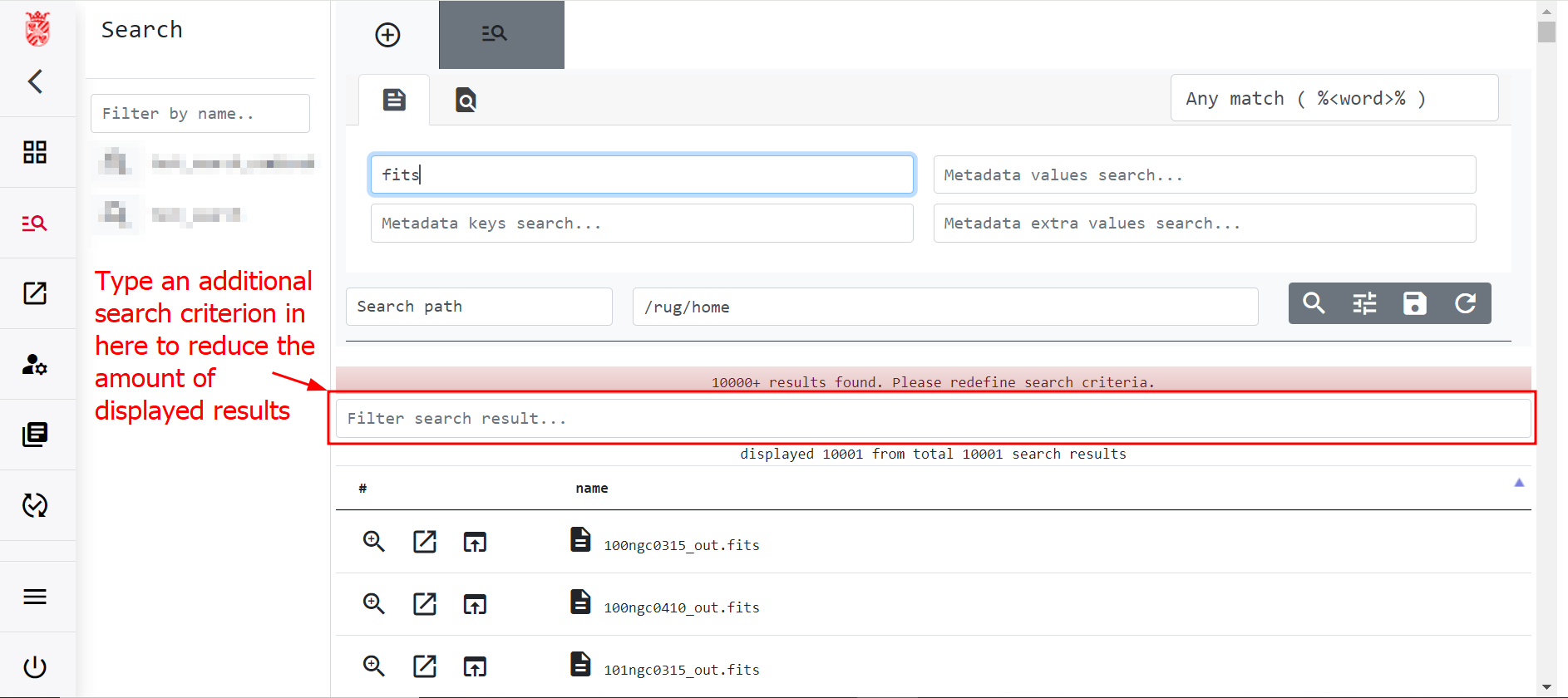
The Web interface then displays only results containing that keyword. This reduces the displayed result set without rerunning the search.

Note: This function filters the displayed results. It does not change the original search parameters. If you save and rerun the search, you must enter the filter again. For frequently used searches, update the original parameters after identifying an effective keyword combination.
Exporting Search Results
The RDMS includes functions for exporting search results in report-compatible formats. First, run a search. Then select one of the following report functions:
- Create report: Creates JSON files containing the search results and parameters. You can use these files to generate a final report.
- Export search results as…: Directly exports the search results in an available format. The current format is
*.csv.
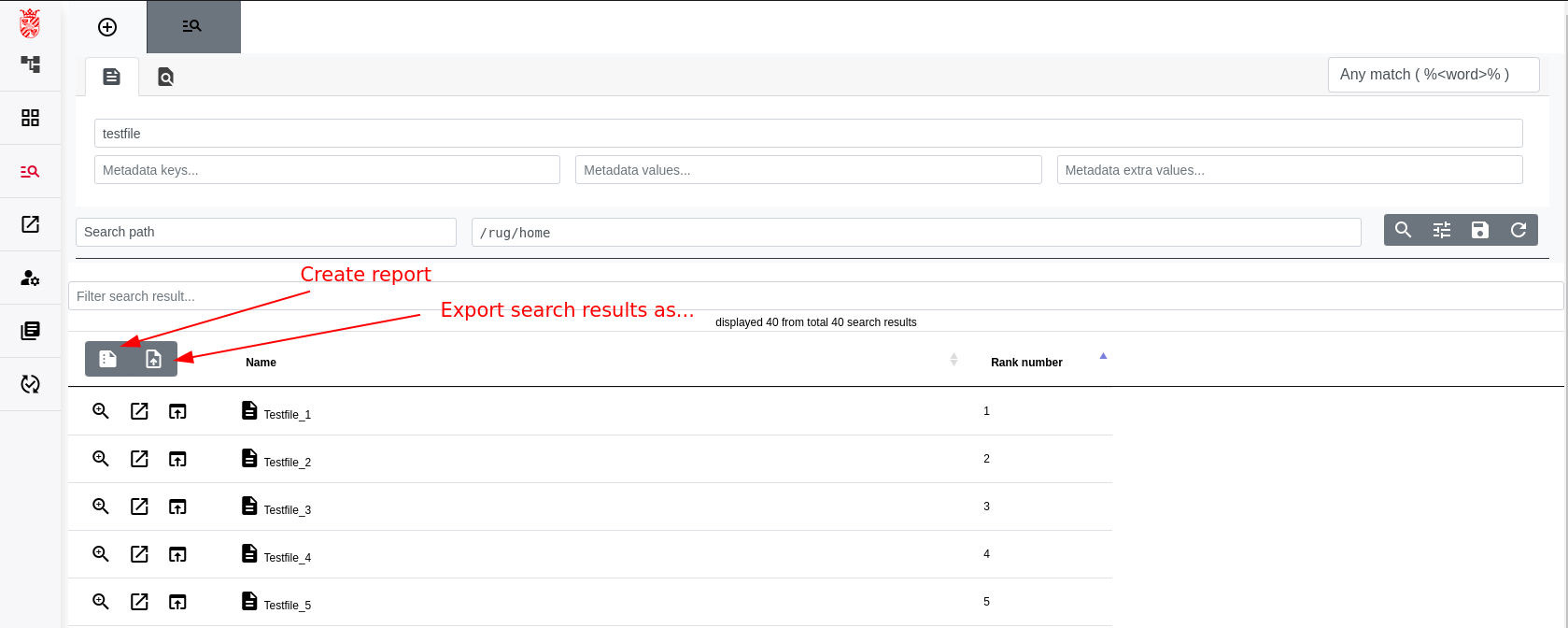
Using the Create Report Function
Click "Create report" to open a dialog window. Enter a report name and choose whether to encrypt the intermediate JSON file.
You should use encryption when the search parameters or result metadata contain sensitive information. The JSON file contains both the search parameters and result metadata.
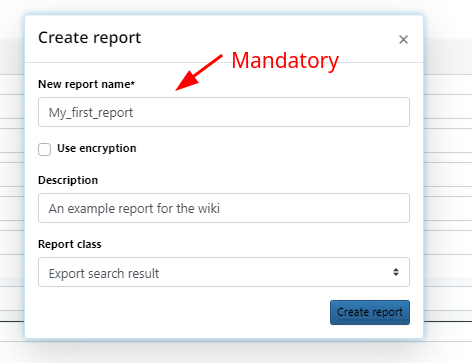
After confirming your choices, click the  button in the menu bar on the left to open the report window.
Depending on your screen resolution, this button may be hidden. If it is not visible, click the  button to display the hidden menu items.
In the report window, you can manage saved reports. You can:
- Generate a final CSV report
- View or Download the JSON files containing the results and parameters
- Delete reports
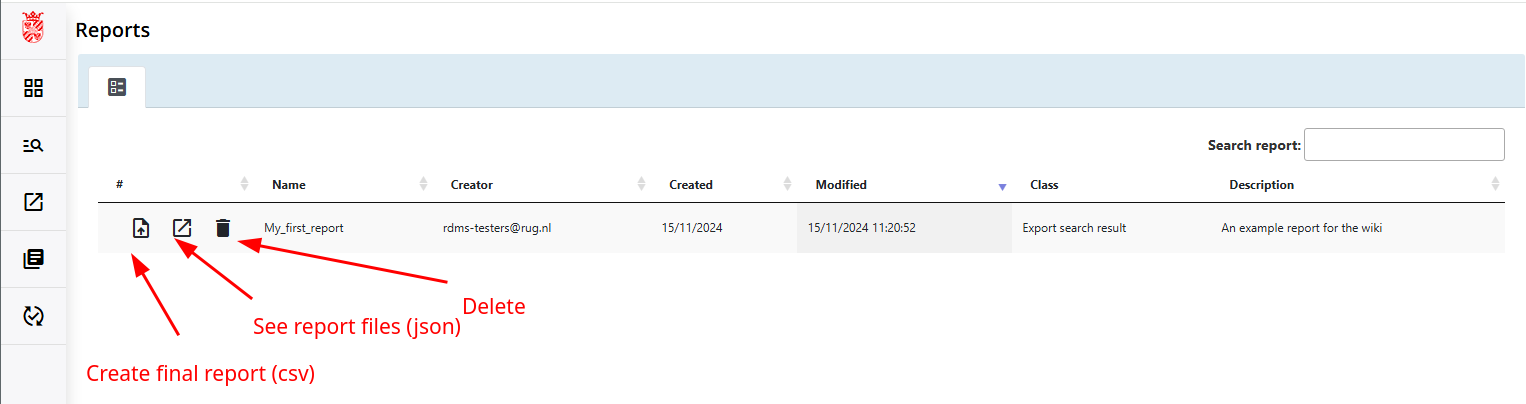
When you choose to create the final report, a new window opens. First, specify the RDMS location in which to save the report. You can later navigate to this location and Download the report through the Web interface.
Then select:
- The result information to include, such as data, metadata, and permissions
- The report format
- The metadata fields to export
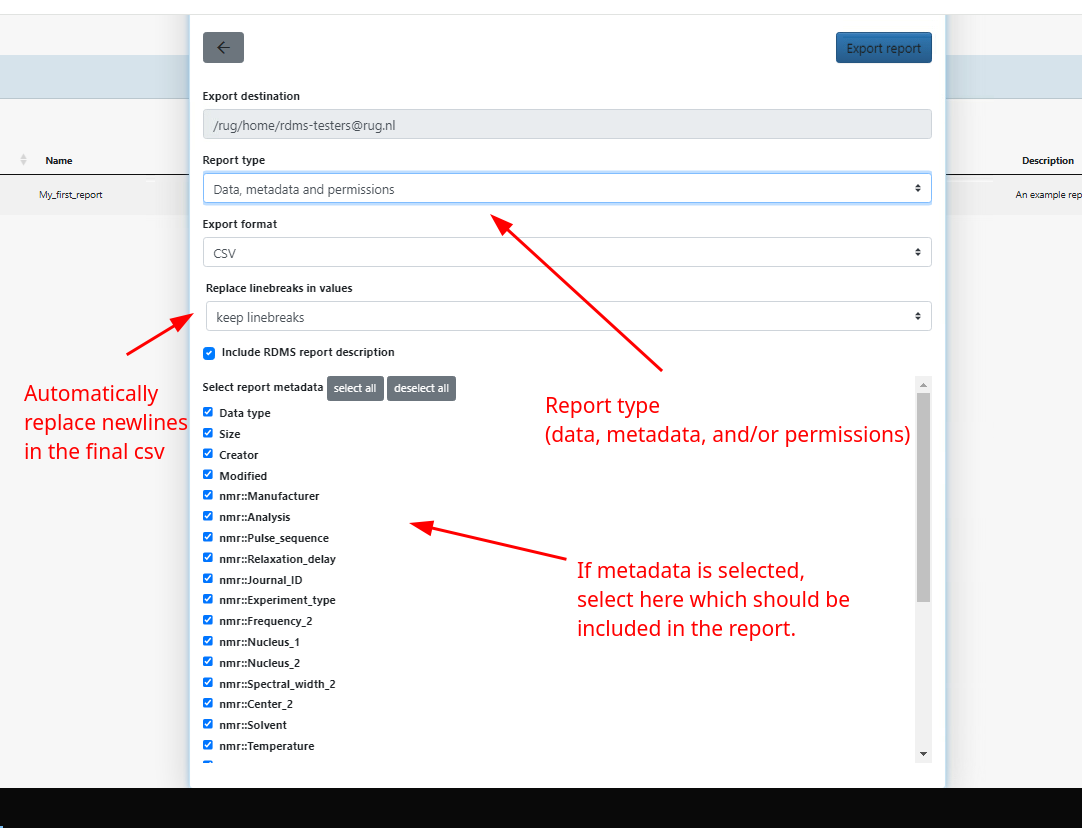
After confirmation, the RDMS saves the report in the specified location. You can then Download the CSV file through the Web interface.
Notes:
- Encryption is optional, but you should use it when the exported results contain sensitive information.
- The report includes the following system-defined metadata by default: "Data type", "Size", "Creator", and "Modified".
Using the Export Search Results As Function
The "Export search results as…" function creates an exportable CSV file directly from the search results. After selecting this option, specify where the CSV file should be saved in the RDMS. Then select the export type, such as data, metadata, and permissions, and enter a name for the export. The Web interface provides a default name.
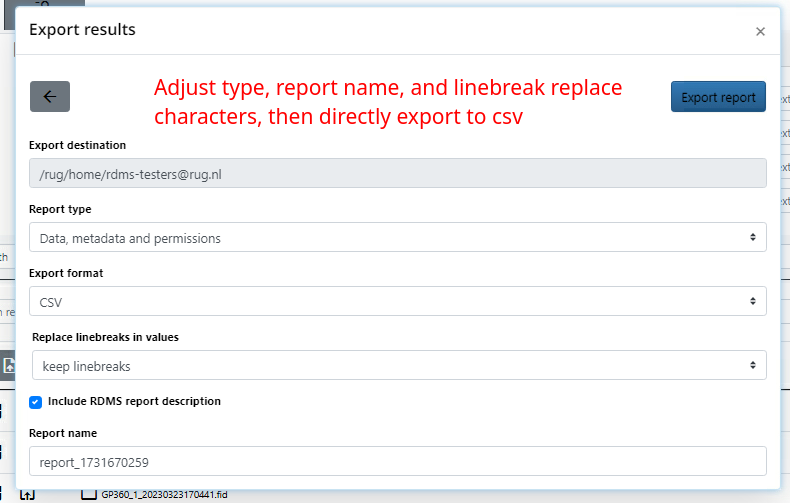
Click "Export report" to generate the CSV file in the specified location. Navigate to that RDMS location to Download the report through the Web interface.
Notes:
- The "Export search results as…" function is a shortcut for generating a CSV file. Therefore, you cannot select individual metadata fields when metadata is included in the export. The RDMS exports all metadata by default.
- The function also creates an intermediate JSON file in the background. These files contain the search results and parameters.
- You can access the intermediate JSON files by clicking the
 button in the menu bar on the left. From there, you can generate additional reports and refine the export parameters, such as the metadata fields to include.
 - The "Export search results as…" function automatically encrypts the intermediate JSON files.
Importing Report Files into Spreadsheet Applications
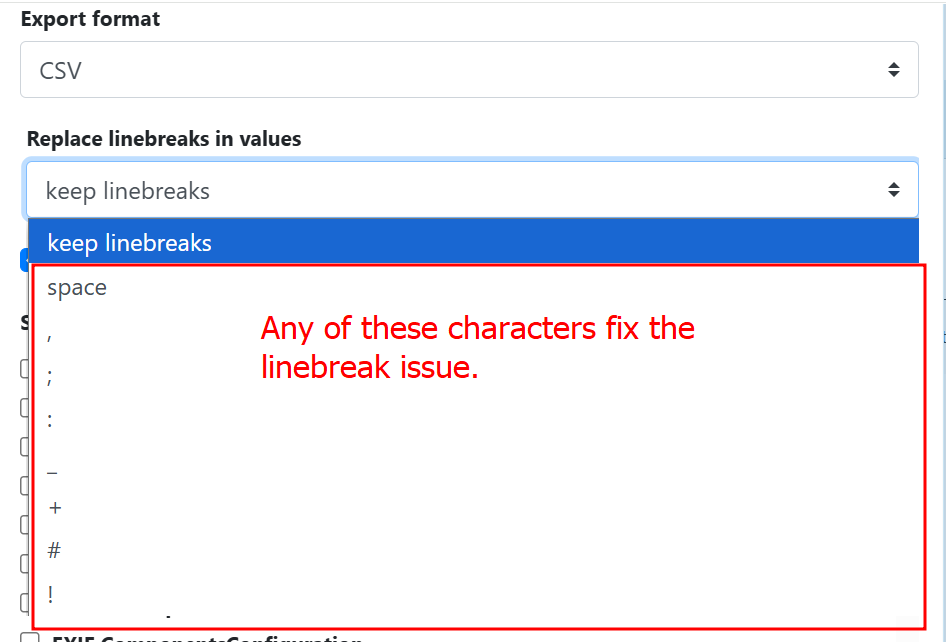
You can import RDMS CSV reports into spreadsheet applications, such as Microsoft Excel or LibreOffice Calc, for visualisation and further processing. RDMS CSV reports use a tab character as the field delimiter. Select the tab delimiter during import. Otherwise, the columns will not be parsed correctly. RDMS metadata fields can contain multiple lines. If multiline fields cause import problems, select a replacement character for line breaks when creating the report.